Showing posts with label Philadelphia 76ers. Show all posts

Wednesday, October 22, 2014

The Official (Way Too Long) SuiteSports 2014-2015 NBA Preview: Part I - The Worst of The Worst

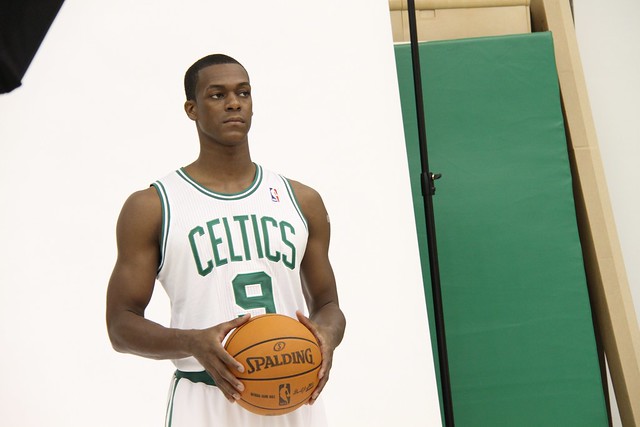
How Rajon Rondo handles a disappointing Celtics season will hint as to his future with the team.
By Jeremy Conlin (@jeremy_conlin)

We’re down to less than a week before the season starts. Are you ready?

We’ve taken a pessimistic look at all 30 teams. We’ve taken an optimistic look at all 30 teams. Now it’s time to split the difference and be realistic. We’re going a bit longer with these - instead of breaking the league into three groups of ten, we’re going with five groups of six so that we can really tackle each team. And instead of going in the order of last year’s standings, we’re going to go in the order that I project them to finish this season. We’re starting off with the worst of the worst - the six teams most likely to win the NBA Draft lottery next May. Let’s start at the bottom.

Philadelphia 76ers
2014 Record: 19-63
Over/Under Wins: 15.5
Odds To Win Championship: 1000-1

In all my years watching basketball and looking at gambling lines (despite never, ever gambling - because that would be illegal), I’ve never seen a team enter a season with 1000-1 odds to win the title.

Friday, October 17, 2014

I Like This Team - A Glass Half-Full NBA Preview (Part I)

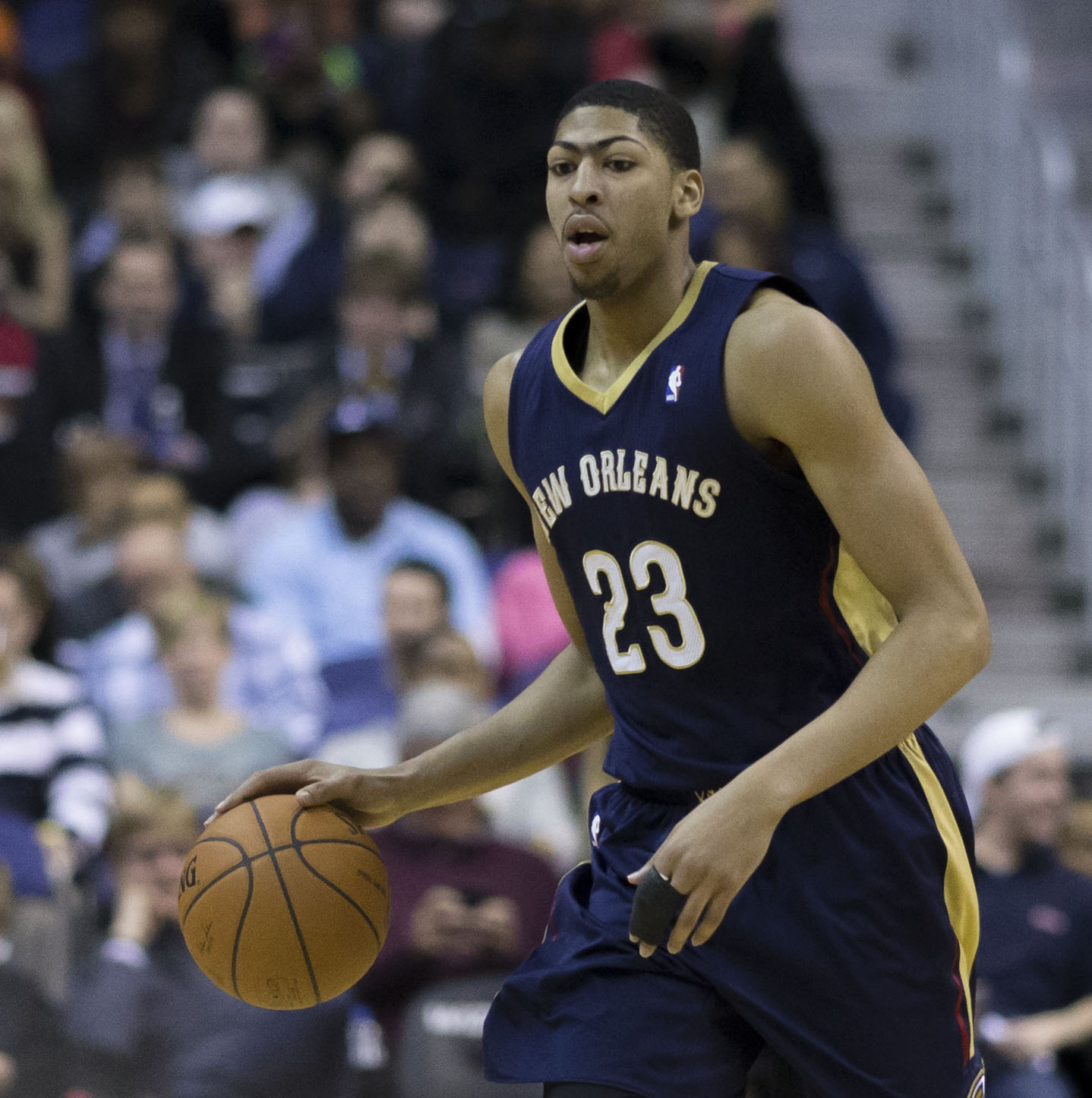
A healthy year for Anthony Davis and the Pelicans could launch New Orleans into the playoffs.
By Jeremy Conlin (@jeremy_conlin)

Earlier in the week, we ran through all thirty teams and said mean things about them. We did this because (a) I’m a pessimist by nature, and (b) as an independent sports blog, taking pot shots is just something you have to do in order to stay relevant. Also, it’s fun.

But at the same time, it’s nice to have a broad appeal. And my grandmother always taught me that you attract more flies with honey than vinegar. I think that means I’m supposed to be nice. So in an effort to be nice, I’m going to offer a positive spin on all thirty teams.

You know how Jon Gruden spends 70 percent of his Monday Night Football broadcasts explaining why he likes this guy (whoever that guy is)? That’s what I’m doing. Imagine the 30 NBA teams are undersized undrafted linebackers and I’m Jon Gruden.

If you want a refresher on last year’s series, you can find it in these three parts. Like Your Team Sucks, we’re going to start with the 10 worst teams from a year ago, but again, we’re going to save Cleveland for the end.

Milwaukee Bucks

Last year was a season from hell, but this year has many reasons for optimism. Jabari Parker might be the most NBA-ready rookie to enter the league in the last five years, and he’ll form a pairing with Giannis Antetokounmpo that has so much length on the wing that the whip-around passing that has become so commonplace in the league these days will prove nearly impossible. If defenses can somehow penetrate their long-armed defense, Larry Sanders and John Henson will be waiting in the paint to place a lid on the basket. New coach Jason Kidd made somewhat of a name for himself last year in Brooklyn by placing an emphasis on flexibility, rather than conforming to his veteran’s tendencies. Now he’ll be able to instill those values into young players.

Monday, March 3, 2014

Why Tanking isn't Such a Bad Thing

The 76ers have no hope for this year, but with surprising rookie Michael Carter-Williams and the promise of a high pick in the loaded 2014 NBA Draft, Philly fans can dream of a better future.
By Joe Parello  @HerewegoJoe

This time of year, so many people are talking about "tanking," and how it's ruining the NBA.

True, it is no fun when your favorite team is seemingly losing games on purpose now, so that it can be better later. But, is it really the worst thing in the world that teams like Philadelphia and Milwaukee are being realistic, tossing short-term goals out the window in favor of long-term ones?

I for one don't think so. In fact, I'm quite the fan of tanking, and here's why.

Monday, February 24, 2014

NBA Trade Deadline Recap

The Pacers added Evan Turner, but will he be enough to put them into the Finals?
By Bennett Corcoran

After J.J. Redick was the prize last February, it appears this unfortunate trend continues; another year under the new Collective Bargaining Agreement, another unbearably slow NBA trade deadline. Luckily, the last minute Evan Turner-Danny Granger swap has serious playoff implications, so it wasn’t a total flop. Let’s take a look at each trade and see which teams are stockpiling for a playoff run.

Friday, February 14, 2014

Ok, Now it's Basketball Season

Tyler Ennis' 35-foot buzzer beater officially kicked off basketball season for me this week.
By Joe Parello  @HerewegoJoe

I make no bones about it, I'm a football guy.

Now, basketball is my second-favorite sport, but it isn't exactly a close second. To me, there are three sports seasons: 1. Football season. Basketball season. 3. Waiting for football season.

Now that the Super Bowl is finished, and National Signing Day is in our rear view mirror, it is officially basketball season, and I've got a lot of work ahead of me to catch up with the rest of the basketball watching world.

Monday, November 18, 2013

NBA Early Season Trends

Kevin Love's hot start has the Wolves looking like playoff contenders. (flickr)
By Bennett Corcoran

With most teams about ten games into the NBA season, tendencies and team styles are beginning to emerge. However, as it is still very early, it can be difficult to determine which of these trends are worth buying into, and which will fade fast. Let’s take a look at a few noticeable observations from the first few games of the season, and attempt to conclude whether these trends will continue or end abruptly.

Wednesday, October 23, 2013

I Like This Team - A Glass-Half-Full NBA Preview (Part II)

The Return of Derrick Rose has Chicago thinking Championship.
By Jeremy Conlin (@jeremy_conlin)

We're continuing with our optimistic NBA preview after dolling out 30 helpings of hate last week with Your Team Sucks. If you missed Part I of I Like This Team, you can find it here. In Part II, we're covering the middle of the standings from last season, including a handful of teams that many would find it hard to be optimistic about. But not me! My rose-colored glasses don't discriminate here. Let's start off with a bleak one so you'll get what I mean:

Philadelphia 76ers

They actually have a future! They could end up with two lottery picks next year (their own and New Orleans’), and they have two lottery picks from the 2013 draft (Nerlens Noel and Michael Carter-Williams). It’s basically impossible to have four lottery picks in two years and whiff on all of them. Someone in there is going to develop into an All-Star caliber player or close to it. If they can keep Thaddeus Young invested in staying in town, and if they can continue to develop Evan Turner, they’ll have the makings of a future playoff team.

Best-Case Scenario: Nerlens Noel recovers from his ACL injury by mid-February, giving him an opportunity to get NBA game experience, but it's so late in the season it doesn't really affect Philadelphia's spot in the standings (or, more importantly, the lottery). Michael Carter-Williams takes his lumps but slowly develops, and Thaddeus Young continues to do Thaddeus Young things. With a former San Antonio assistant as the head coach, those three players (along with Evan Turner) use their length and quickness to plant the seeds of a future lockdown defensive squad. 

Wednesday, October 16, 2013

Your NBA Team Sucks - A Glass-Half-Empty Season Preview (Part II)

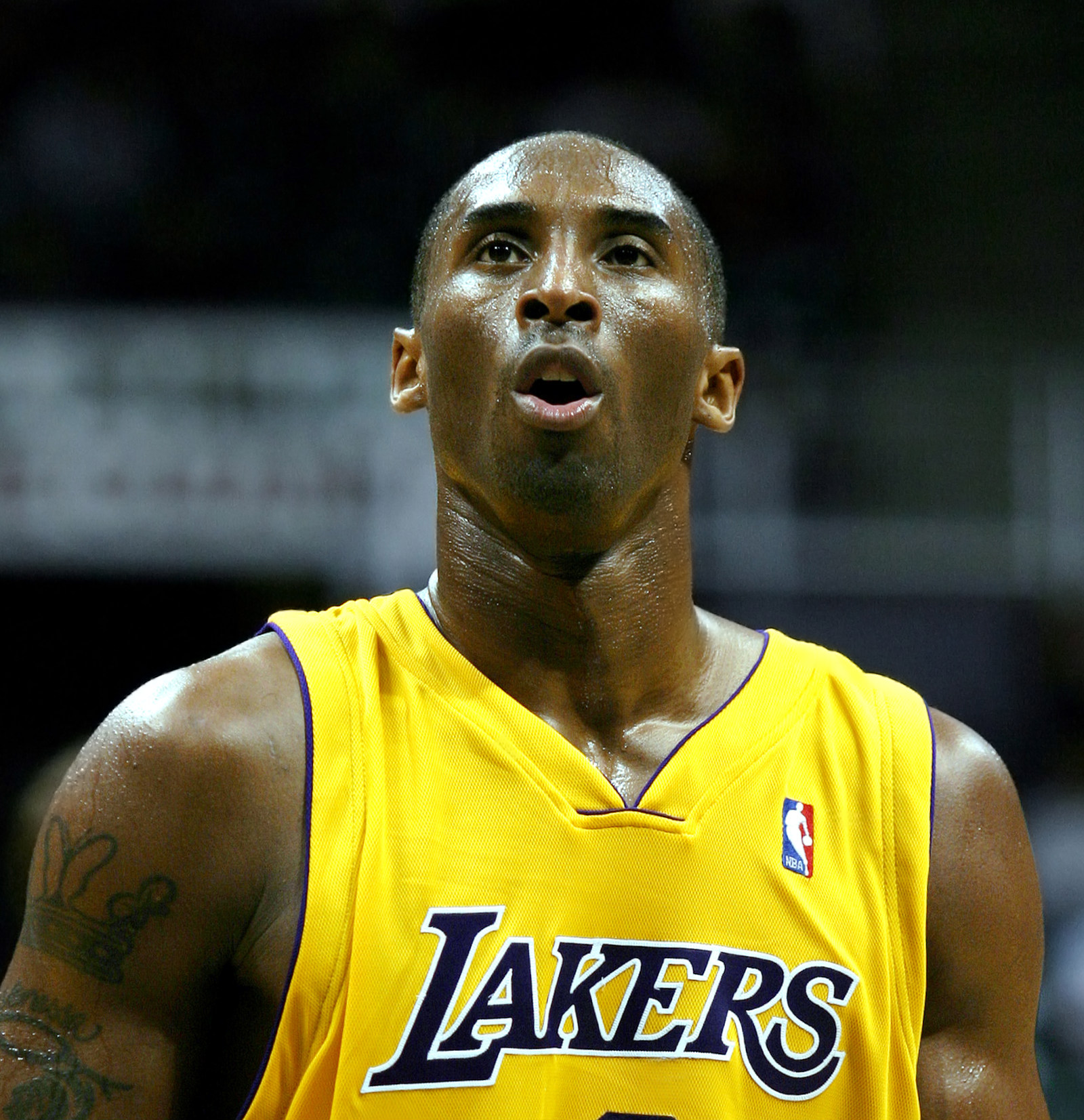
Kobe Bryant. Not pictured - Kobe Bryant's Achilles injury.
By Jeremy Conlin (@jeremy_conlin)

This is Part II of our Your Team Sucks series, previewing the worst parts of every NBA team for the upcoming season. In Part I, we covered the 10 worst teams from last season, and tomorrow we're covering the 10 best teams from last season. That means today, we've got the middle 10, including our first batch of playoff teams.

Toronto Raptors

In the first draft of this series, I didn’t write a section about the Raptors because I forgot to add them to my list. That’s how much they suck. I forgot they existed.

First of all, their “star” is Rudy Gay. The same Rudy Gay that had negative offensive win shares at the time he was traded from Memphis to Toronto last season. The same Rudy Gay that attempted almost 17 shots per game last season and sported a true shooting percentage 1.3 points lower than the lowest-ranked team in the league.

Rounding out the squad is Kyle Lowry (who is in a contract year and is surely bolting after the season), DeMar DeRozan (who is somehow even more inefficient than Gay), and Jonas Valanciunas, who is still at least two seasons away from being anything other than just a solid big man.

Worst-Case Scenario: Gay decides what has been holding him back from true superstardom over the last handful of years is positional flexibility, so he insists on playing point guard "like LeBron does." He averages six turnovers per game. Terrence Ross continues to come off the bench until Dwyane Casey realizes he can neither dribble nor shoot, at which point he is inserted into the starting lineup, just to play a joke on DeMar DeRozan. The Raptors begin to tank right after the All-Star break, justifying Aaron Gray's employment.

Philadelphia 76ers

Thaddeus Young, Evan Turner, Spencer Hawes, Jason Richardson, Lavoy Allen, Kwame Brown, Royce White, Arnett Moultrie, James Anderson, Tim Ohlbrecht, Tony Wroten, Darius Morris, Nerlens Noel’s knee injury, and Michael Carter-Whoops I Threw It To the Wrong Team. That’s 14 members of a 15-man NBA roster. Unless the 15th man is LeBreem-Abdul O’Nealajuwon, this team ain’t winning 15 games.

Worst-Case Scenario: Against better judgment, Nerlens Noel returns to the lineup after New Years, and his rebounding and shot-blocking presence vault Philadelphia back towards the middle of the lottery instead of locking up the worst record in the league by the All-Star break. 

Friday, June 28, 2013

Eight Weird Moments from The 2013 NBA Draft

The Cavaliers surprised everyone by taking Anthony Bennett with the first overall pick (flickr)
By Jeremy Conlin

Here are eight of the weirdest moments from the weirdest NBA draft I can remember:

1. The Cavaliers select Anthony Bennett first overall

All day and in the week leading up, the Cavs had been engaging in some savvy misinformation. Various reports were getting leaked that they were either shopping the pick (to Minnesota, Portland, New Orleans, to name three) or that they were still undecided who they were going to take if they kept the pick.

Thursday, May 23, 2013

Previewing the NBA Coaching Vacancies

Will Stan Van Gundy return to the bench next season?
By Bennett Corcoran

While some teams are fortunate enough to be fighting for an NBA championship, others have already shifted gears toward next year. With coaching situations yet to be resolved, the ongoing slew of interviews and the assembling of long lists of candidates has begun. Although it’s difficult to make predictions as teams are bringing in many of the same candidates for the same positions, here we outline which coaches could fit specific teams and what each NBA team is looking for in their coach of the future.

Thursday, October 25, 2012

The NBA's Overrated Teams

In Part I, I outlined the six worst teams in the league. In Part II, I’m breaking down six teams that aren’t as good as it seems some people think they are. Let’s start here:

Brooklyn Nets

2012 Record: 22-44
2012 Prorated Record: 27-55
2012 Scoring Margin: -5.98
2012 Pythagorean Record: 19-47
2012 Pythagorean Prorated: 24-58

Expected Rotation: Deron Williams, Joe Johnson, Gerald Wallace, Kris Humphries, Brook Lopez (starters); MarShon Brooks, Mirza Teletovic, C.J. Watson, Andray Blatche, Josh Childress, Reggie Evans, Keith Bogans

On paper, it looks like Brooklyn “won” the offseason in the Eastern Conference, trading mostly spare parts for Joe Johnson, re-signing Deron Williams, locking up a now-healthy Brook Lopez to a contract extension, and moving to a new arena in Brooklyn.

However, basketball games aren’t played on paper. They’re played by the little men that live inside our television sets.

The more I look at this roster, the more trouble I have identifying anything that they’ll do particularly well. Yes, they have a very talented starting unit, but that doesn’t really matter unless they can fit that talent into a system that works. Deron Williams is a screen-roll point guard, but neither Kris Humphries nor Brook Lopez is really a screen-roll big man. Gerald Wallace is a decent all-around player, but he doesn’t exactly space the floor for Brooklyn’s isolation scorers (Johnson and Lopez).

Defensively, they should be a train wreck. Lopez is about as mobile as Mitt Romney’s hair, and Kris Humphries wouldn’t know good weak-side defense if it dressed up as Kim Kardashian and served him with divorce papers. They have size on the wings with Johnson and Wallace, which should occasionally force opponents into sub-optimal shots, but there’s still nothing to stop smart teams from putting Lopez in screen-roll situations every time down the court.

On top of all of this, they have little to no depth. MarShon Brooks had a half-decent rookie season, and he should provide a decent scoring punch off the bench, but other than that, they’re relying on re-treads like C.J. Watson, Josh Childress, Reggie Evans, and Keith Bogans. European import Mirza Teletovic should provide some floor spacing, but he isn’t particularly good at things like playing defense or securing rebounds. Playing him next to Brook Lopez will be quite an adventure.

They’ll certainly be a playoff team, but people that are expecting them to compete with Miami at the top of the conference are being a bit too optimistic for the inaugural season in Brooklyn.

Prediction: 48-34, 6th in Eastern Conference


Dallas Mavericks

2012 Record: 36-30
2012 Prorated Record: 45-37
2012 Scoring Margin: 0.95
2012 Pythagorean Record: 35-31
2012 Pythagorean Prorated: 43-39

Expected Rotation: Darren Collison, O.J. Mayo, Shawn Marion, Dirk Nowitzki, Chris Kaman (starters); Vince Carter, Elton Brand, Brandan Wright, Delonte West, Rodrigue Beaubois, Dahntay Jones, Dominique Jones (bench)

I was pegging Dallas to struggle this season even before Dirk got hurt, now I think they’re in some pretty serious trouble.

For the first time in a long, long time, Dallas had serious problems scoring the ball last season. They finished 22nd in offensive efficiency, below such offensive juggernauts as Philadelphia and Sacramento. Two of the things that held them back were their low offensive rebound rate, just 28th in the league at 23.4%, and their low foul rate, 25th in the league at .190 FTA/FGA.

They saw a fair amount of roster turnover, but the problem is they didn’t really address either of those weaknesses. They brought in Elton Brand and Chris Kaman to replace Brendan Haywood, Ian Mahinmi, and Lamar Odom, but neither of those guys present an upgrade on the offensive glass or through drawing fouls, as both of them spend most of their time spotting up from the mid-range. They lost Jason Kidd and Jason Terry, their two primary ballhandlers and initiators of the offense, and replaced them with Darren Collison and O.J. Mayo, who are decent scorers but poor distributors.

During their 2011 Playoff run, they carved teams up in the screen-roll game, but all of those perimeter players (Barea, Kidd, Terry) have left over the last two years. A lot of their offense this year is going to be dependent on Darren Collison and O.J. Mayo to be the main creators, but the evidence of their respective careers to date don’t suggest that they can do much more in that regard than dribble the air out of the ball.

My projections had them on the cusp of missing the playoffs to begin with, and now that Dirk is expected to miss close to a month, that should send their offense into a tailspin. They’ll start the year slowly, and won’t have enough time to make up enough ground.

Prediction: 40-42, 9th in Western Conference


New York Knicks

2012 Record: 36-30
2012 Prorated Record: 45-37
2012 Scoring Margin: 3.20
2012 Pythagorean Record: 41-25
2012 Pythagorean Prorated: 51-31

Expected Rotation: Raymond Felton, Ronnie Brewer, Carmelo Anthony, Amar’e Stoudemire, Tyson Chandler (starters); J.R. Smith, Jason Kidd, Steve Novak, Kurt Thomas, Marcus Camby, Pablo Prigioni, James White, Chris Copeland (bench)

I would be a lot more excited for the Knicks if it were 2008. Carmelo, Amar’e, Tyson Chandler, Jason Kidd, Marcus Camby, Ronnie Brewer, J.R. Smith, and Kurt Thomas? That’s a murderers row in 2008. In 2013? Not so much.

The biggest problem with this Knicks team is that the pieces don’t fit. Carmelo Anthony is a fine player, as are Amar’e Stoudemire and Tyson Chandler, but when all three are on the floor together, it’s a bit of a disaster. The most glaring problem is the Amar’e when he’s sharing the floor with either or both of the Knicks other two stars.

Since Carmelo came to New York, the two have been on the floor for 1880 minutes together, and in those minutes, they’ve been outscored by 123 points. That’s only 3.14 points per 48 minutes, but the point here is that it’s a NEGATIVE number, as opposed to, say, the +373 that LeBron and Wade had in 1300 minutes last year (+13.0 per 48 minutes), or the +301 that Chris Paul and Blake Griffin had in 1860 minute last season (+7.7 per 48 minutes).

It’s pretty hard to justify starting Carmelo and Amar’e next to each other when the evidence pretty clearly shows that both the players and the team don’t perform as well as they do otherwise. In 2012, when Carmelo was on the floor with Amar’e, he scored 20.3 points per 36 minutes on 41% shooting, and the Knicks were outscored by 2.4 points per 48 minutes. With Carmelo on the floor, but Amar’e on the bench, Carmelo scored 27.8 points per 36 minutes, on 45% shooting, while also sporting a significantly higher foul rate (.30 FTA/FGA with Amar’e, .42 FTA/FGA without him), and the Knicks outscored their opponents by 8.4 points per 48 minutes.

The same thing happens when you look at what happens when Amar’e and Chandler share the floor together. Amar’e scores 16.7 points per 36 minutes when Chandler is on the floor, 23.7 points per 36 minutes when Chandler isn’t. The Knicks are outscored by 2.1 points per 48 minutes when they’re both on the floor, as opposed to treading water with just Amar’e (+0.1 points per 48 minutes), or excelling with just Chandler (+7.6 points per 48 minutes).

When you look at the on/off stats in relation to Carmelo and Chandler, you see more predictable results (The Knicks are in the black with both on the floor, in the red with one and not the other).

All of this leads to a pretty obvious conclusion: Amar’e Stoudemire just doesn’t help the Knicks win basketball games. But the most obvious short-term fix (moving Stoudemire to the bench and playing Carmelo Anthony at power forward) doesn’t seem to be in the cards, because, well, I don’t know why. Probably because that would make way too much sense.

Prediction: 46-36, 7th in Western Conference


Los Angeles Clippers

2012 Record: 40-26
2012 Prorated Record: 50-32
2012 Scoring Margin: 2.56
2012 Pythagorean Record: 39-27
2012 Pythagorean Prorated: 48-34

Expected Rotation: Chris Paul, Chauncey Billups, Caron Butler, Blake Griffin, DeAndre Jordan (starters); Jamal Crawford, Eric Bledsoe, Lamar Odom, Grant Hill, Matt Barnes, Ronny Turiaf, Trey Thompkins (bench)

I’ve heard some chatter about the Clippers making a push towards the upper echelon of the Western Conference, but I’m not quite sure I see it. There are certainly arguments to be made that the team will be better, but there are also arguments to be made that the team will regress.

First, the reasons why they might improve – DeAndre Jordan and Eric Bledsoe will each have another year under their respective belts, and they brought in Lamar Odom, Grant Hill, Matt Barnes, and Ronny Turiaf (all plus defenders). They dumped Nick Young and replaced him with Jamal Crawford, who is slightly more judicious with his shot selection (although I’ll concede that’s kind of like saying something is slightly less preachy than Season 1 of The Newsroom), they’ll have a full season of Chauncey Billups, and the rest of the roster will have more experience playing with Chris Paul (which can only be seen as a positive).

Here’s the flipside though – are we sure that any of the guys they’re bringing in are any good? Let’s be honest here, Grant Hill just turned 40 and saw a noticeable decline last year. Billups is 36 and is coming off an Achilles injury that ended his least-productive season since 2001. For all we know, Odom could be completely washed up and last season in Dallas wasn’t a fluke. Caron Butler just had the worst season of his career, and Jamal Crawford saw a noticeable decline in his scoring efficiency.

Their new wing players certainly offer more size than Randy Foye and Mo Williams, which will help defensively, but offensively, they're inferior shooters. Foye and Williams combined to shoot 568 threes last year, and made almost 39% of them. Hill, Crawford, and Butler aren’t going to be able to replicate that.

The Clippers best bet for definitive improvement is dumping the minutes that went to riff-raff like Ryan Gomes and Bobby Simmons and giving it to guys like Hill and Crawford. But that only represents about 800 minutes from last season, or about 12 minutes per game. In other words, they’re upgrading one spot on the floor for one quarter of the game. That’s certainly a good thing, but not enough to see a drastic improvement over the course of the season.

Prediction: 50-32, 5th in Western Conference


Portland Trail Blazers

2012 Record: 28-38
2012 Prorated Record: 35-47
2012 Scoring Margin: -0.62
2012 Pythagorean Record: 32-34
2012 Pythagorean Prorated: 40-42

Expected Rotation: Damian Lillard, Wesley Johnson, Nic Batum, LaMarcus Aldridge, Meyers Leonard (starters), Joel Freeland, Victor Claver, Luke Babbitt, J.J. Hickson, Elliot Williams, Nolan Smith, Ronnie Price (bench)

Okay, so I get that nobody is exactly expecting Portland to make the playoffs this year, but I don’t think people many people realize exactly how long a fall the Blazers are in for.

I’ve talked to a few people that act as if Portland is re-tooling, not re-building, but the facts don’t line up with that argument. They traded Gerald Wallace (and miraculously got a lottery pick for him), traded Marcus Camby for trial runs of Jonny Flynn and Hasheem Thabeet (neither are still with the team), and dumped Ray Felton and Jamal Crawford. They re-signed Nic Batum, but considering he’s only 23, it’s pretty obvious that he’s part of their re-building plan as well.

The team this year is going to consist of the three guys they’re going to re-build around – Aldridge, Batum, and Matthews, and they’ve surrounded them with young players they can grow old with. But for right now, those young players are going to take a lot of lumps. Damian Lillard projects to be a good player, but rookie point guards that aren’t named Magic Johnson, Chris Paul, or Kyrie Irving generally tend to have forgettable seasons. Meyers Leonard is a big, mobile center with decent shooting touch, but big guys taken at the back end of the lottery don’t have great track records (Cole Aldrich, Robin Lopez, Hilton Armstrong, or Patrick O’Bryant, anyone?). Portland also brought Joel Freeland and Victor Claver across the pond, and while both are 25 or younger, neither projects to be anything more than a bench player in the NBA.

Their future is bright, but right now is not the future

Prediction: 31-51, 12th in Western Conference


Philadelphia 76ers

2012 Record: 35-31
2012 Prorated Record: 43-39
2012 Scoring Margin: 4.24
2012 Pythagorean Record: 43-23
2012 Pythagorean Prorated: 53-29

Expected Rotation: Jrue Holiday, Jason Richardson, Evan Turner, Spencer Hawes, Andrew Bynum (starters), Thaddeus Young, Dorrell Wright, Nick Young, Lavoy Allen, Arnett Moultrie, Kwame Brown, Royal Ivey (bench)

I wrote about this right after the trade, but I don’t think this team fits together very well. When they lost Iguodala and Lou Williams, they effectively handed the reigns over to Evan Turner, which I’m rather dubious about. He’s an inefficient scorer, and his assist-turnover ratio hovers below 2:1.

The Sixers’ offense was at its best last year at the beginning of the season, when a lot of the offense ran through Spencer Hawes out of the high post, where he would hit cutters diving to the rim. That model likely won’t work this year, as Andrew Bynum will be taking up space on the low block. It will open up a bit of a hi-lo game, but that neutralizes the strengths of players like Thaddeus Young and Evan Turner, both of whom work better in motion offenses and don’t space the floor effectively.

The underrated part of Philly’s offseason was improving their three-point shooting. They were a pretty good three-point shooting team last season, ranking 8th in the league at 36.2%, but the impact was limited, considering they attempted the 6th-fewest triples. As a result, their weighted shooting efficiency actually dropped, going from 15th in the league in FG% to 19th in the league in eFG%.

Their new additions should provide them a more efficient allocation of shots. Jason Richardson was an afterthought in the Bynum trade, but he’ll likely start at shooting guard and can make open shots. They also obtained Dorrell Wright for, well, effectively nothing, giving Golden State the rights to Edin Bavcic in exchange. Don’t bother remembering the name, he was drafted in 2006 and his NBA future is about as bright as mine is. They brought in Nick Young as well, and while they paid a stupefying price tag to get him, he’ll provide them with shooting on the wing. 

Overall, it’s a rather perplexing team. They have a legitimate post threat in Bynum to pair with shooting on the wing and a good passing big man, but it’s unclear how Holiday, Turner, and Young fit into that model. Holiday, Turner, and Young would all thrive in an offense similar to the one last year (lots of weakside action, very little isolation or post-up), but then the rest of the team wouldn’t fit. There’s going to be some friction while these kinks get worked out, and if Bynum’s knee starts acting up again, Philly could tumble out of the playoff picture.

Prediction: 48-34, 5th in Eastern Conference
Tuesday, February 28, 2012

2012 NBA Power Poll 1.0

By Jeremy Conlin

The All-Star break has come and gone. With the crazy scheduling, it was just too difficult to get a grasp on teams 15-20 games into the season, so I decided to wait until we had a full half-season sample before busting out my comprehensive review of each team. So here we go. All statistics are through Monday, February 27.

The Isiah Thomas Division

30. Charlotte Bobcats 

Let's break down exactly how bad the Bobcats are - they're dead last in SRS1, they're dead last in efficiency margin2 , they don't have a single player with a PER over 15.5 (every other team in the league has at least two), they have one double-digit win and 19 double-digit losses. Their best player is D.J. Augustin, who, by my estimation, isn't even a top-15 player at his own position.3 Sooo, yeahhh....

29. Washington Wizards 

Yeah, so they only have seven wins, but two of them are over Oklahoma City and Portland, so that has to count for something, right? Right?

28. Detroit Pistons 

Umm, so Greg Monroe is having a pretty good season, I guess.

27. Sacramento Kings 

The Jimmer/Tyreke Evans backcourt combo failed pretty spectacularly. Jimmer has gotten benched in favor of Isaiah Thomas, who was drafted 50 spots after him. Oomph.

You really can't win in today's NBA unless you have SOMEONE that can effectively run your offense (it doesn't really matter what position he plays - LeBron and Wade seem to do okay). Team defenses are too good. Unless you have a player that can get everyone in the right place and then create, your offense will fail. Evans is capable of turning into LeBron-Lite and just turning the game into a layup line, but he's hopeless at really doing anything other than attacking the basket, and he's not good enough to just get to the rim whenever he feels like it.

The Mike Dunleavy Division 

26. New Jersey Nets 

Deron Williams is finally playing well (or, at least closer to his own standard), but the rest of their roster is so laughably bad that it doesn't seem to matter. Still, I can't shake the feeling that a Dwight Howard trade is still in this team's future. The only problem is, it would be stupid to do it mid-season when they can just sign him outright or acquire him through a sign-and-trade this summer. If they trade for him now, they'll be better, and it will send them further down in the draft. Wouldn't it be better to hold off, grab someone like Jared Sullinger or Thomas Robinson in the draft, then pair him with Howard this summer? Right now they have the fourth-best odds to win the lottery, so the likelihood of them ending up with one of the top 4 bigs4 is exceedingly high. I'd suggest for them to wait.

25. New Orleans Hornets 

Let's break down the Chris Paul trade, 33 games into the season:

1. They got Eric Gordon, who has played in two games for a total of 78 minutes, and is a restricted free agent this summer.
2. They got Chris Kaman, who sucks. No other way to put it.
3. They got an unprotected No. 1 from Minnesota, which turns out not to be that great, because Minnesota is actually good.
4. They got Al-Farouq Aminu, who has the potential to be a really good player, so long as you don't ask him to do anything that involves dribbling or shooting.

Who wants a do-over on that one?

24. Toronto Raptors 

Andrea Bargnani was having his best season ever and became a legitimately effective offensive player, so naturally he gets hurt. He's no longer just a guy that puts up points because he takes a ton of shots for a bad team - he has a career high in True Shooting % thanks to a career-best foul rate. However, Ed Davis has regressed basically across the board (especially in offensive rebounding and turnovers), as has DeMar DeRozan. Right now, it seems like the only real keepers on this Toronto team are Bargnani and Calderon, but they aren't guys that can be anything more than fringe starters surrounding a superstar or two.

The Good Bad Teams 

23. Phoenix Suns 

#FreeSteveNash

22. Cleveland Cavaliers 

It's hard to imagine a rookie point guard having a better season than Kyrie Irving is having – only Chris Paul in 2006 had a higher PER as a rookie.5 Cleveland has jumped from 29th in Offensive Efficiency last season to 22rd this season, and if the season ended today. Cleveland would be just 1.5 games out of a playoff spot.

21. Milwaukee Bucks 

The law of 3rd-year point guards has given Brandon Jennings a bit of a leap, but still not enough to offset the suckitude of the rest of the team. Somehow this team gives Miami fits, which makes absolutely no sense to me, but I just accept it as a fact of life.

20. Golden State Warriors

 Stephen Curry's ankle injury really hampered them to start the season, but now he's back and playing as good (or better) than he ever has. His foul rate has dropped,6 which is a bit perplexing, but that could be explained by him playing more tentatively with the sore ankle. Otherwise, all of his other numbers are up (rebound, assist, and steal rates are all at or near career-highs), and he's scoring at incredible rates both as a screen-roll ballhandler and using off-ball screens (top 10 in scoring efficiency in each category).

Unfortunately, their defense is atrocious, possibly because of Mark Jackson's peculiar aversion to playing Andris Biedrins. Ekpe Udoh has played more minutes than Biedrins has this season, which is a bit peculiar because the only thing that Udoh does better than Biedrins is shoot free throws.

Nope. 

19. Boston Celtics 

Defensively, they're still elite – 4th in the league in defensive efficiency. Unfortunately, they labor to score because they're dreadful in several important offensive categories.

First, they're dead last in the league in offensive rebounding percentage,7 while also being a poor defensive rebounding team. They're also 3rd-worst in offensive turnover rate, while only being in the middle of the pack in forcing turnovers. This results in a disparity in the number of possessions, so it becomes almost a wash with their great defensive efficiency. They do a great job of limiting scoring on a per-possession basis, but they surrender so many extra possessions through turnovers and offensive rebounds that it ultimately doesn't matter.

The Western Fustercluck, Part I 

18. Utah Jazz 
17. Minnesota Timberwolves 
16. Memphis Grizzlies 
15. Denver Nuggets 
14. Portland Trail Blazers 

Don’t even ask me what’s going on here, because I have no idea. Utah looks good until you realize that nobody can shoot (dead last in 3PT%). Minnesota is just exceptionally mediocre across the board. So is Memphis. Denver looked like a potential #1 seed until half their team got injured, now they might not even make the playoffs. And Portland has had a ton of dumb luck in close games (they’re 18-16, but have the scoring differential of a 23-11 team).

What In Holy Hell Is Going On? 

13. New York Knicks 

I really don’t have anything to say here about Jeremy Lin that hasn’t already been said multiple times by countless people. What I am here to say, is that Tyson Chandler has been the 2nd-best center in the league this season, only nobody seems to notice or care. He’s currently 7th in the league among centers in Value Added,8 but defensively, he’s better than everyone above him save for Dwight Howard. The Knicks are 5th in the league in defensive efficiency – last season they were 22nd. They’re 4th in the league in defensive rebound rate9 – last season they were 26th. They’re 5th in the league in defending opponent’s isolation plays - last season they were 21st. If the season ended today, he would break the NBA record for True Shooting Percentage, and he’d break it by over 3%. Yet because the Knicks’ offense has been so bad (at least until Jeremy Lin showed up), people seem to just gloss over Chandler’s unbelievable season.

For The Love Of God, Please, Not Again 

12. Atlanta Hawks 
11. Orlando Magic 

If these two teams meet in the playoffs again, I'm just going to kill myself. I'll have no other option.

The Bad Good Teams 

10. Indiana Pacers

This is the classic team that does everything well, nothing poorly, and nothing spectacularly. They’re 13th in offensive efficiency, 10th in defensive efficiency, 8th in efficiency differential, 8th in rebound rate, 11th in committing turnovers, and 7th in forcing turnovers. Even more than the next team, they’re the type of team that will succeed in the regular season but get run over in the postseason.

9. Philadelphia 76ers

Philly has cooled off considerably after their torrid start, but they’re still 3rd in the league in efficiency differential and 4th in SRS. They’re a team that will probably struggle in the playoffs (because their depth becomes less valuable when rotations shorten), but for some reason, they create insane matchup problems for Chicago. They beat them by 16 in the beginning of February, and even going back to last season, they took two out of three from Chicago, including a 12-point win in Chicago at the end of March. Similarly to Miami, they cover a lot of ground defensively, which allows them to force Derrick Rose towards the sidelines and keep him out of the middle of the floor where he’s most dangerous, and they attacked him in pick-and-rolls.

Furthermore, they barely ever turn the ball over, which limits transition opportunities. They turn the ball over on just 10.3% of possessions, first in the league. They’re so far ahead of everyone else in this category that there is a bigger gap between 1st and 2nd (San Antonio at 12.7%) than between 2nd place and 27th place (New Orleans at 15.0%). Any team that limits turnovers to that degree will be able to stay in games because they won’t have empty possessions.

The Western Fustercluck, Part II

8. Los Angeles Lakers

Kobe is still shooting nearly as much as Gasol and Bynum combined despite being the least efficient scorer of those three guys. I’m still waiting for an explanation for why it’s a good idea for Kobe to be shooting the ball at a rate higher than any season of his career other than 2006, while scoring less efficiently than he ever has in his entire career.

7. Houston Rockets 

They started 3-7, they’ve gone 17-7 since. This is weird, considering Kevin Martin is having a season almost as bad as he did in 2010, when he was hurt all year and traded mid-season, and Luis Scola has taken steps back in just about every measurable category. Their depth, along with Kyle Lowry’s inspired play has kept them afloat, but Kevin Martin will need to play better (his career-worst foul rate is a primary culprit) if Houston wants to make the playoffs. Right now they appear safe, but once Denver gets healthy, they should make a strong push.

6. Los Angeles Clippers

Lob City has been as good as advertised – the Clippers are 4th in the league in offensive efficiency. However, they appear to have some serious flaws for when the playoffs role around. First of all, they aren’t good enough defensively, they rank just 20th in defensive efficiency, mostly because they do a poor job defending the three point line (6th-worst in the league in opponents 3PT%), their foul rate is terrible (3rd-worst in opponents FT/FGA), and they don’t force turnovers (6th-worst in opponents TOV%).

Matchup-wise, basically any elite Western team will give them fits because they don’t have a 2-guard with size to defend guys like Kobe, Kevin Martin, Ginobili, or James Harden. Any of those guys would simply eat the Clippers alive in a playoff series, which is why I’m not taking the Clippers particularly seriously.

5. Dallas Mavericks 

If the Mavs win the West after effectively giving up on their title defense before it even started by dumping Tyson Chandler and fighting through Dirk’s worst season ever, and Rick Carlisle DOESN’T win the Coach of The Year Award, we should just give up and not hand out that award anymore.

4. San Antonio Spurs

They’re 6th in efficiency differential and scoring margin, but doing so while playing the 4th-hardest schedule and just 14 of 34 games at home. And they’re doing all of this without Manu Ginobili. When Ginobili gets healthy and their schedule gets easier, they become the only team that can really challenge the only Western team we haven’t covered yet for the #1 seed.

The Contending Contenders 

3. Chicago Bulls 

The numbers say that Chicago is just as good, if not better than Miami, but until the numbers lead to a result that’s any different than what we saw last May, Chicago is only 2nd-best in the East. They’re still way too predictable offensively to be taken seriously against any moderately good defensive team. Everything is built on top of a high screen with Rose and Noah or Rose and Boozer. They still don’t have anyone else that can create offense, and the same guy creating every shot is a model that has never worked.

2. Oklahoma City Thunder

People that are saying the West is wide open aren’t in touch with reality. People who are saying OKC needs another scorer aren’t in touch with reality. Their foul rate is incredible; they take .278 free throws for every field goal attempt. To put that in context, the next-highest team is Miami (with .26 FT/FGA), and the 8th-place team, Cleveland (.221), is closer to last (Philly at .165) than they are to first. And when they get to the foul line, they make them at a league-best clip (79.6%).

As a result, they’re 2nd in the league in offensive efficiency, behind only Miami. When Westbrook, Harden, and Durant are on the floor together, their offensive efficiency spikes even higher – the 5-man unit of Westbrook, Harden, Durant, Ibaka, and Collison scores over 130 points per 100 possessions. No unit with over 50 minutes of floor time together this season even approaches that number.

Don’t let anyone tell you differently, there’s a clear favorite to come out of the Western Conference. It will be an enormous upset if anyone else in the West beats the Thunder this spring.

The Prohibitive Favorite

1. Miami Heat 

Were you expecting someone else?

Footnotes:

1. A combination of scoring margin and strength of schedule.
2. Net points per 100 possessions.
3. Paul, Rose, Williams, Nash, Westbrook, Rondo, Lawson, Lowry, Parker, Irving, Lin, Rubio, Jennings, Holiday, Curry, and Wall are all better.
4. Anthony Davis, Andre Drummond, Robinson, Sullinger.
5. 22.1 for Paul, 20.7 for Irving.
6. 3.3 FTA per 36 minutes last year, just 2.5 FTA/36 this year.
7. Percentage of their own missed shots they rebound.
8. Based on PER and adjusted for minutes played – for example, Tim Duncan has a higher PER than Chandler does, but Chandler’s VA is higher because he’s played nearly 300 more minutes over the course of the season.
9. Percentage of available defensive rebounds they grab.

Friday, January 20, 2012

Not-So-Power Forwards

When you think of the old-school NBA Power Forward, you probably think of a dude that's tough, rugged, defense-rebounding type player. The dude that would lay a guy out if he went to the rim, the guy that protected the rim as if his life depended on it. You think of a dude like Charles Oakley or Horace Grant.

But I'm not talking about that dude.

When you think of the new-school NBA Power Forward, you probably think of a dude that cares less about defense and rebounding than he does throwing down hellacious dunks. He wants to run the pick-and-roll and turn himself into a runaway freight train coming down the key towards the rim. Other times he'll step out to keep the defense honest. Regardless, he's a nearly unguardable, all-around offensive force. You think of a dude like Amar'e Stoudemire or Chris Bosh.

But I'm not talking about that dude.

When you think of some of the great NBA Power Forwards, you think of a guy that blends both of those models. They're capable of dominating a game on both ends. If they aren't quarterbacking their team's defense, at the very least they're owning the defensive glass, starting the break with a crisp outlet pass, and maybe even finishing the break on the other end. You think of a dude like Tim Duncan, Kevin Garnett, Charles Barkley, or Karl Malone.

But I'm not talking about that dude either.

I'm talking about a brand new wave of NBA Power Forwards. They're playing the position in a way that really hasn't been played before. And the craziest part? They aren't even power forwards.

Thaddeus Young, Danilo Gallinari, and Gerald Wallace all play significant minutes at power forward for the second units of top-10 teams, despite the fact that none of them seem to be natural power forwards. Gallinari and Wallace are almost certainly small forwards, and Young probably doesn't have a true position. Yet according to the positional breakdowns on www.82games.com (stats only through January 18th), Gallinari and Wallace have played close to 20% of the minutes at power forward for their respective teams this year, while Young has played over 50% of Philly's power forward minutes.

These minutes represent some of the biggest reasons why each of these players' respective teams are so successful. So far this season, teams that have gone small with their second unit have been blowing opponents out of the water. Philly, Denver, and Portland are just the tip of the iceberg - teams like Miami (playing LeBron at the 4), Oklahoma City (playing Durant at the 4), and Indiana (playing Danny Granger at the 4) have all had success going small with their second units. And it's not like this is a brand-new development this season - Lamar Odom made a lot of money and was a huge difference-maker for two title teams doing this.

Gallinari has been the one that has seen the biggest individual improvement at power forward. He plays most of his minutes at small forward, but when he moves to the 4 with Denver's second unit (usually with Ty Lawson, Andre Miller, and Arron Afflalo on the perimeter), he becomes a remarkably more productive player.

His foul rate increases dramatically when he plays power forward. At the 3, he attempts just 5.6 free throws per 48 minutes. At the 4, it's nearly 13 per 48 minutes. He gets himself matched up with a bigger, slower player, and most times will blow by them and draw a foul at the rim. He's especially adept at doing this in spot-up situations. As the defender rushes to close out on his three-point shot, he'll blow by them, either creating a foul or an open mid-range shot. As a power forward, his eFG% increases from 49.6% to 56.1%, and he scores nearly eight points more per 48 minutes (22.1 at the 3 compared to 30.3 at the 4), and his PER spikes from 17.9 to 24.6. In every manner of speaking, Gallinari is a better offensive player at power forward.

Wallace, meanwhile, transforms his team defensively when he plays at power forward. For the season, Portland's defense allows just over 100 points per 100 possessions (100.3, to be exact). When Wallace is on the floor at any capacity, that number increases to around 96 points per 100 possessions. But when he's on the floor at power forward (usually in conjunction with Nic Batum at small forward), that number plummets all the way to 92 points per 100 possessions.

One of the biggest reasons for Portland's defensive success when Wallace is on the floor is his uncanny ability to induce missed shots. In the 49 possessions so far this season where Wallace has been the primary defender for a spot-up player, he's holding opponents to just 0.71 points per possession, and limiting them to 23.8% shooting from the floor (just 20% from three). In isolation situations, he allows just 0.58 points per possession, which is good for 6th in the entire league, and has not committed a shooting foul in those scenarios all season.

Thaddeus Young, however, is the player that takes this to another level. In his 352 minutes of play this year (through Tuesday's games), the 76ers have outscored their opponents by 153 points. That's almost 21 points per 48 minutes. From an offensive perspective, when Young is on the bench, Philly scores just 93.8 points per 100 possessions. While he's on the floor? That number balloons to 117.5 points per 100 possessions. And while Philly's entire bench has huge bumps, Young's is still higher. The four players that he generally shares the court with are Jrue Holliday, Lou Williams, Evan Turner, and Spencer Hawes, and none of them record offensive bumps higher than 16.9 points per 100 possessions (compared to the 25.7 for Young). 

This bump is largely because of how deadly Young is in transition. Unfortunately, I can't provide anything by way of video, but Young is breathtaking to watch in the open floor, and effectively unguardable. As soon as Philly secures possession of the ball, either through a defensive rebound or through a turnover, Young will take off down the floor at a speed that no other forward in the league (other than maybe LeBron) can match. If you exclude last-second, half-court heaves (of which Young has two this season), Young is 21-for-27 from the floor in "transition" scenarios (according to Synergy Sports), and scores 1.47 points per possession, which puts him in the same class as players like LeBron and Blake Griffin among the league's most dynamic scorers in transition.

Now, this is not to say that going small at power forward is a solution for every team in every matchup. In the last week, Paul Millsap and the Jazz have demolished both Denver and the Clippers when they tried to go small with their second units. New Orleans would be able to do the same thing with Chris Kaman and Carl Landry if the rest of their team wasn't so dreadful that anything done by the bench is quickly nullified. However, against most teams, especially those with point guards that can push tempo effectively (like, say, Ty Lawson, Ray Felton, and Jrue Holliday), lineups like the ones run by Denver, Portland, and Philadelphia will often run opponents off the floor.